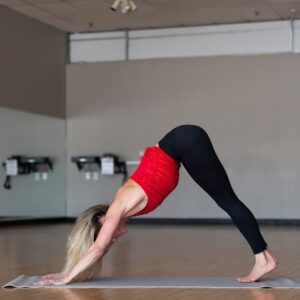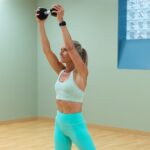
Planks are among the most effective ways to build core strength, but they are also among the most misunderstood. I see so many women forcing themselves into a version that hurts their wrists, strains their shoulders, or leaves their lower back doing all the work. That is not strength. That is your body asking for a better approach.
The good news is that planking can be highly supportive when performed with intention, smart progressions, and the right variation for your body on that day. In this tutorial, I walk you through multiple plank options so you can build strength without pain or burnout. Here are three tips to help you get more out of every plank, no matter your level.
Tip 1: Choose the plank that matches your body today
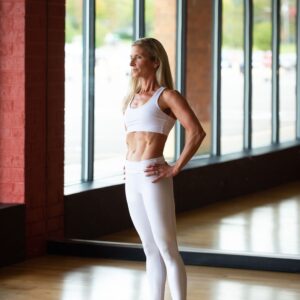
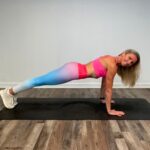
There is no single “right” plank. Standing planks are a powerful, beginner-friendly option that take pressure off the wrists and shoulders while still training your core. Incline planks offer a perfect next step, allowing you to build strength with more support. From there, you can progress to high planks and forearm planks when your body is ready.
Your energy, recovery, hormones, and stress all matter. Some days your strongest move is choosing a more supportive option. That is not regression, it is intelligent training.
Tip 2: Build strength through progression, not pressure
One of the biggest mistakes I see is jumping straight to a full plank and hoping your body catches up. Instead, use progressions that actually train your core to do its job. Progressing from all fours to knees, then to a full plank, teaches your body to stabilize without relying on momentum or strain.
Progression builds confidence and resilience. Pressure builds frustration and injury. Choose the path that keeps you consistent.
Tip 3: Let your core do the work, not your joints
A good plank should feel like deep core engagement, not wrist pain, shoulder tension, or lower back discomfort. Think about gently drawing your ribs in, engaging your glutes, and keeping your spine long. If something feels off, adjust your position or switch to a different variation. Strength is about control, not holding on at all costs.
When planks are performed correctly, they support posture, protect the back, and improve total-body strength. When they are forced, they do the opposite.
If you want to feel strong, stable, and confident in your core without overtraining, this tutorial walks you through every level, step by step. Whether you are brand new, coming back after burnout, or simply ready to train smarter, there is a plank that works for you.
Strong does not have to hurt. Let me prove it to you. Try this workout!